
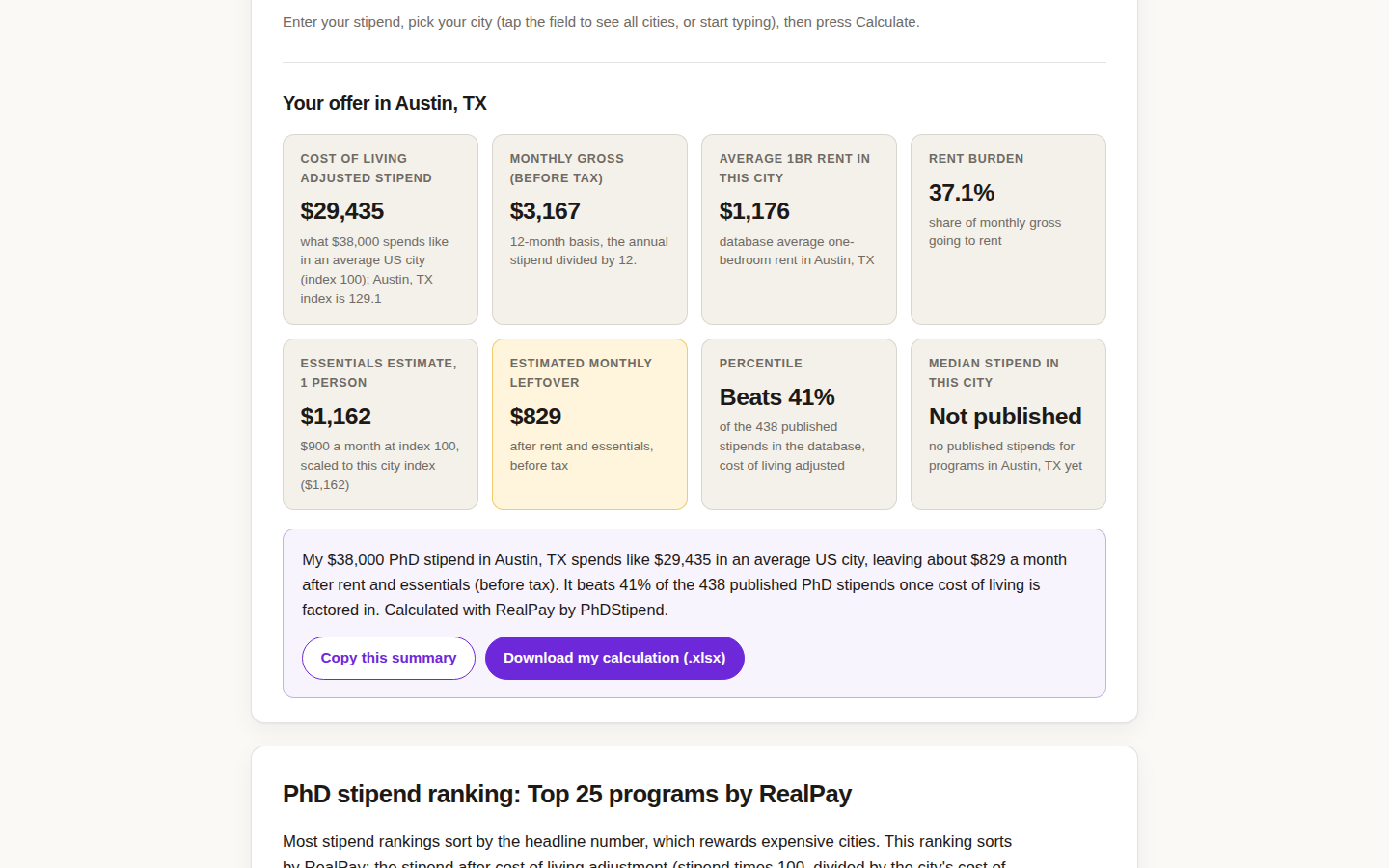
Every PhD stipend ranking you have seen sorts by the headline number, which quietly rewards expensive cities. We re-sorted ours by what is left after rent and essentials, using RealPay. The order moves more than you would expect, and the screenshot above shows why: a 38,000 dollar stipend in Austin, TX spends like 29,435 dollars in an average US city, carries a 37.1 percent rent burden, and leaves about 829 dollars a month before tax. It beats 41 percent of the 438 published stipends once cost of living is factored in. Decent. Not the headline.
Five ideas the re-sort gives you
1. Compare leftovers, not stipends. Two offers 6,000 dollars apart can leave the same monthly leftover if one city eats the difference in rent. The leftover line is the only fair comparison, and it is the line most offer letters never print.
2. Use the ranking when you build your application list. The full adjusted ranking by city is a targeting tool, not trivia. Programs whose stipends survive their city's rent are programs where you will not spend five years broke. Shortlist accordingly, then check the raw numbers in stipend by university.
3. Run the CS list separately. The CS stipend ranking has its own gravity: industry adjacent programs pay differently, and their cities differ too. Our computer science stipend breakdown covers the headline side; run the finalists through RealPay for the rent side before you fall in love with a number.
4. Stress test the expensive city offer. A top headline stipend in a top cost city is the classic trap. RealPay shows average one bedroom rent from the database (1,176 dollars in the Austin example) and the rent burden as a share of monthly gross. If the burden is pushing 40 percent, the prestige is being paid out of your grocery money. Our piece on living on a stipend in an expensive city goes through the coping maths.
5. Negotiate with the adjusted number, politely. Programs rarely move on stipend, but some move on signing support, summer funding, or fee coverage. Walking in knowing your offer beats only 41 percent of published stipends after adjustment is a calmer, stronger conversation than walking in with a vibe. The National Science Foundation publishes its own graduate fellowship stipend levels, which make a useful public benchmark in that conversation.
Keep the two views side by side: headline ranking for ambition, adjusted ranking for rent. Then make the decision with both open. Run your own offers in RealPay, download the spreadsheet for each, and read the short RealPay explainer if you started here. And if a partner is moving with you, tick the dependent spouse option before you decide anything. Households do not run on headline numbers either.